 Sarasota Siding
 Why Siesta Key Roofs Wear Differently
Siesta Key sits on a barrier island, which means every roof out here takes a harder hit than a roof ten miles inland in Sarasota. The Gulf is close on one side, Sarasota Bay is close on the other, and there's nothing between most homes and open water to slow the wind down. Add in the intense, near-constant Florida sun and the salt that rides in on the air year-round, and you've got a combination that ages asphalt shingles faster than almost anywhere else in the county. A shingle roof that would last two more years in a shaded inland neighborhood might already be showing granule loss, curling, or nail popping on Siesta Key.
That doesn't mean asphalt shingles are a poor choice here — they're still one of the most practical, cost-effective roofing systems available, even on a barrier island. It means the installation has to be done with the local conditions in mind from the first nail, not adapted after the fact. We work on Siesta Key regularly, alongside jobs throughout Sarasota County, and the difference between a roof that holds up and one that fails early almost always comes down to installation detail, not the shingle brand printed on the wrapper.
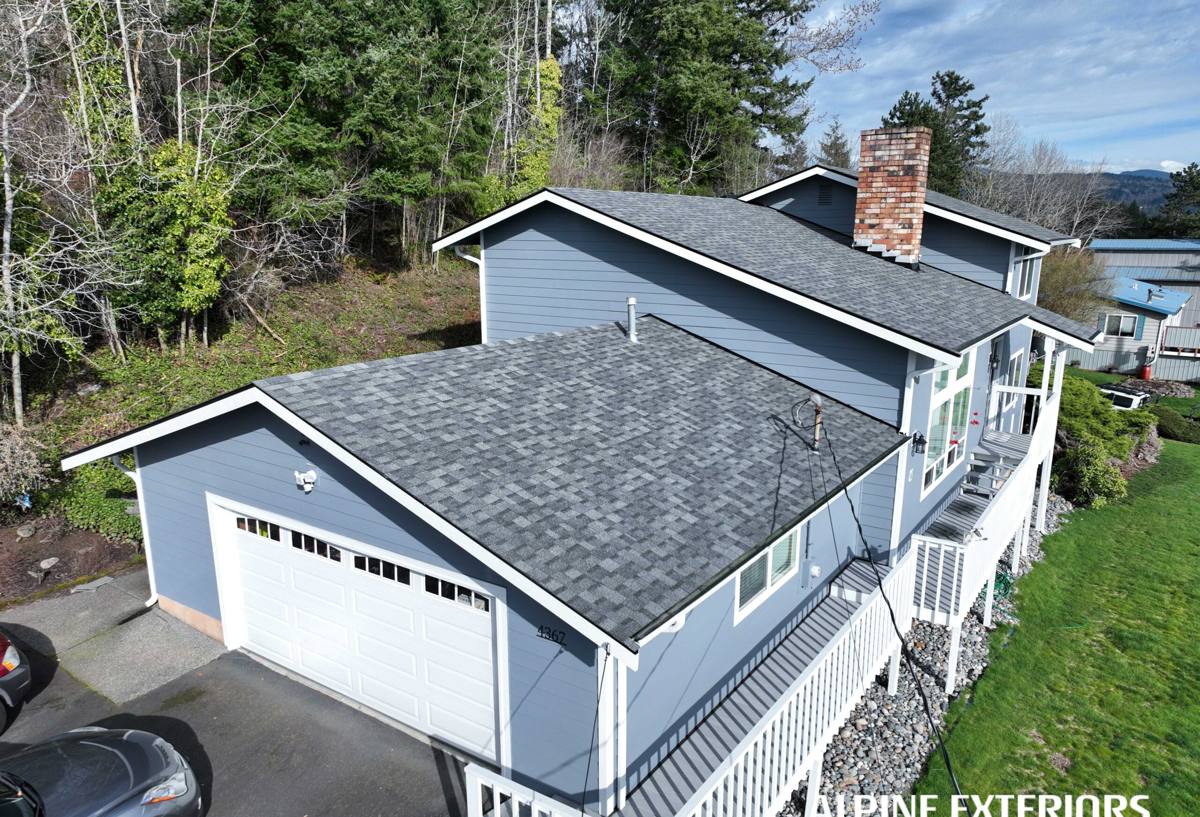
How Wind, Salt Air, and UV Damage Asphalt Shingles Specifically
Each of the three big local stressors attacks a shingle roof in a different way:
Wind uplift
Sustained coastal wind and the gusts that come with tropical systems get under shingle edges and tabs. If the nailing pattern was rushed, if the sealant strips never activated properly, or if the starter course at the eaves and rakes was skipped or done wrong, wind finds those weak points first. Once one shingle lifts, it exposes the fasteners and underlayment beneath it, and the next storm does more damage than it should have.
Salt air corrosion
Airborne salt settles on every exposed surface, including roof metal. Flashing, drip edge, nail heads, and vent boots corrode faster near the water than they do inland. Once flashing starts to pit or a nail head rusts through its coating, that's a future leak point, even if the shingles around it still look fine.
UV exposure
Florida sun is intense year-round, not just in summer. UV breaks down the asphalt binder in shingles over time, and the protective granules on the surface gradually wash and wear away. Once granule loss is significant, the shingle underneath is exposed directly to sun and rain, and it ages much faster from that point forward.
Wind-driven rain
It isn't just how hard it rains — it's the angle. Wind-driven rain during a squall or tropical system can push water sideways and upward, testing every lap, seam, and flashing detail on a roof. A roof that would keep out a straight-down rain can still leak under wind-driven conditions if the underlayment and flashing weren't installed to handle it.
Florida Building Code and Wind Ratings: What Belongs on a Siesta Key Roof
Sarasota County falls under the Florida Building Code's high-wind design requirements, and coastal areas like Siesta Key sit at the upper end of the local wind speed map. That affects several real decisions on your roof, not just paperwork:
- Shingles used on Siesta Key homes should carry a wind rating suited to coastal exposure — most reputable architectural shingles now come rated for 110-130 mph or higher when installed with the manufacturer's specified nailing pattern.
- The nailing pattern itself matters as much as the shingle rating. A high-wind-rated shingle installed with the wrong nail count or placement loses most of that rating in practice.
- Sealant activation matters too — shingles rely on heat to bond their self-sealing strips. Roofs installed just before a cold snap, or shingles that get lifted by wind before the strips ever bond, are more vulnerable in the following weeks than a roof that's had time to seal.
- A secondary water barrier (a sealed underlayment system) is required by code in many Florida wind zones and is worth having on a barrier island roof regardless, since it's your backup if wind ever compromises the shingles themselves.
None of this requires exotic materials. It requires installing standard, well-made asphalt shingle products correctly, to the specification they were actually engineered for.
What a Correct Asphalt Shingle Installation Includes
On a coastal roof, the shingles are really just the top layer of a system. Every layer underneath has a job:
| Component | Role on a Siesta Key Roof |
|---|---|
| Drip edge (corrosion-resistant metal) | Directs water off the roof edge and protects the fascia from wind-driven rain intrusion |
| Underlayment (synthetic or peel-and-stick) | Backup water barrier if wind or wear compromises the shingle layer |
| Ice-and-water-style membrane at valleys and eaves | Extra sealed protection where wind-driven rain and pooling water are most likely |
| Starter strip at eaves and rakes | Locks down the first course against wind uplift, a common early-failure point |
| Field shingles, nailed to spec | The visible, weather-facing layer — its wind rating only holds if nailing matches the manufacturer's pattern |
| Flashing at walls, chimneys, and penetrations | Corrosion-resistant metal to stand up to salt air over the life of the roof |
| Ridge and soffit ventilation | Balanced airflow that reduces attic heat buildup and moisture, protecting shingles from underneath |
Skipping or shortcutting any one of these doesn't necessarily show up on day one. It shows up two or three storm seasons later, as a leak that seems to come from nowhere.
Tear-Off vs. Overlay: Why We Don't Recommend Overlays on Barrier Island Roofs
An overlay — installing new shingles directly over an existing layer — can save money upfront, and it's allowed in some circumstances under Florida code. On Siesta Key, we generally recommend against it. Overlaying traps moisture and heat between the two layers, hides the condition of the deck and underlayment from view, and makes it impossible to install a proper secondary water barrier. Given how hard the local climate already is on a roof, starting with a full tear-off, deck inspection, and fresh underlayment system is worth the difference in cost. It's also the only way to actually know what condition your roof deck is in before it gets covered up for another 15-25 years.
Our Process, From Inspection to Cleanup
Whether you're calling us for a repair or a full replacement, the approach is the same in principle:
- Inspection. We check the shingles, flashing, vent boots, and — where accessible — the attic side of the deck for soft spots, staining, or ventilation issues. We'll tell you honestly whether you need a repair, a partial re-roof, or a full replacement.
- Written scope and estimate. You get a clear description of the materials, wind rating, and work involved before anything starts — no vague allowances.
- Permitting. Roof replacements in Sarasota County require a permit and inspection. We handle that process as part of the job, not as an extra you have to chase down.
- Tear-off and deck check. Old material comes off, the deck gets inspected board by board, and any soft or damaged decking is replaced before anything new goes down.
- Underlayment and flashing. Sealed underlayment, valley and eave protection, and corrosion-resistant flashing go in before a single shingle is installed.
- Shingle installation to spec. Starter strips, field shingles, and ridge caps installed with the nailing pattern the wind rating actually depends on.
- Ventilation check. We confirm intake and exhaust airflow are balanced, since a roof can be installed perfectly and still underperform if the attic can't breathe.
- Cleanup and magnetic sweep. Debris and stray nails cleared from the property — important on a barrier island lot with landscaping, pools, and tight side yards.
- Final walkthrough and permit close-out. We review the finished work with you and make sure the county inspection is scheduled and passed.
Insurance, Roof Age, and the 4-Point Inspection Reality
Florida homeowners' insurance has gotten more particular about roof condition and age, and that affects Siesta Key homeowners directly. Many carriers now require a 4-point inspection before issuing or renewing a policy, and roof age and condition are usually the first thing that inspection flags. An aging asphalt shingle roof with visible granule loss, curling, or prior repairs can mean higher premiums, non-renewal, or a requirement to replace the roof before coverage continues.
A documented, code-compliant replacement — permitted, inspected, and installed to current wind-rating standards — is often what gets a Siesta Key homeowner back into normal coverage terms, and can sometimes qualify for wind mitigation credits depending on your carrier. We can't speak for your insurance company, but we can make sure the paperwork, permit, and materials on your roof reflect the work that was actually done, which is what carriers and inspectors are looking for.
Maintaining an Asphalt Shingle Roof on a Barrier Island
A well-installed roof still benefits from regular attention out here. A few habits make a real difference over the life of the roof:
- Rinse accumulated salt residue and debris off the roof surface periodically, especially after long dry stretches with onshore wind.
- Keep gutters and valleys clear of leaves and debris from mature landscaping, which is common on Siesta Key lots and can hold moisture against the shingles.
- Walk the exterior after any significant wind event and look up for missing, lifted, or displaced shingles — catching it early is a repair; catching it late is a leak.
- Have flashing and vent boots checked every few years, since salt-air corrosion affects metal components before it affects the shingles themselves.
- Don't ignore small interior stains on a ceiling or in an attic — on a coastal roof, wind-driven rain can find its way in gradually before a leak becomes obvious.
Signs You Need Repair or Replacement
Some warning signs are obvious from the ground; others take a closer look. Watch for:
- Granules collecting in gutters or at downspout outlets
- Shingles that look curled, cupped, or cracked
- Bald or discolored patches where granules have worn away
- Missing or visibly lifted shingles after a windy day
- Rust staining or streaking near flashing and vent boots
- Soft spots underfoot if you're on the roof, or sagging visible from the ground
- Water stains on interior ceilings, especially near chimneys, skylights, or wall intersections
- A roof approaching or past the 15-20 year mark without a full inspection on record
Any one of these on its own isn't necessarily an emergency, but on a Siesta Key roof, small issues compound faster than they would inland. Catching them early is almost always cheaper than waiting.
Why a Local Siesta Key Crew Matters
Roofing a barrier island home isn't quite the same job as roofing a house a few miles inland. Access is tighter — bridge traffic, narrow lots, and limited staging space all affect how a job gets planned and scheduled. Many Siesta Key neighborhoods have their own aesthetic expectations or deed restrictions worth checking before materials are ordered. And a crew that works this specific stretch of coastline regularly has a feel for how fast salt air, sun, and wind actually age a roof here, which shapes real decisions — nailing pattern, underlayment choice, flashing material — not just the sales pitch.
We do this work throughout Sarasota County, including Siesta Key, and we handle the Sarasota County permitting and inspection process as a normal part of the job, not an afterthought. That local familiarity is often the difference between a roof that's merely code-compliant and one that's actually built for where it sits.
If your Siesta Key roof is showing its age, was damaged in a recent storm, or you just want an honest read on where it stands, we're glad to take a look. Reach out for a free, no-pressure estimate using the form below.