 Sarasota Siding
 What University Park Homes Need From Their Siding
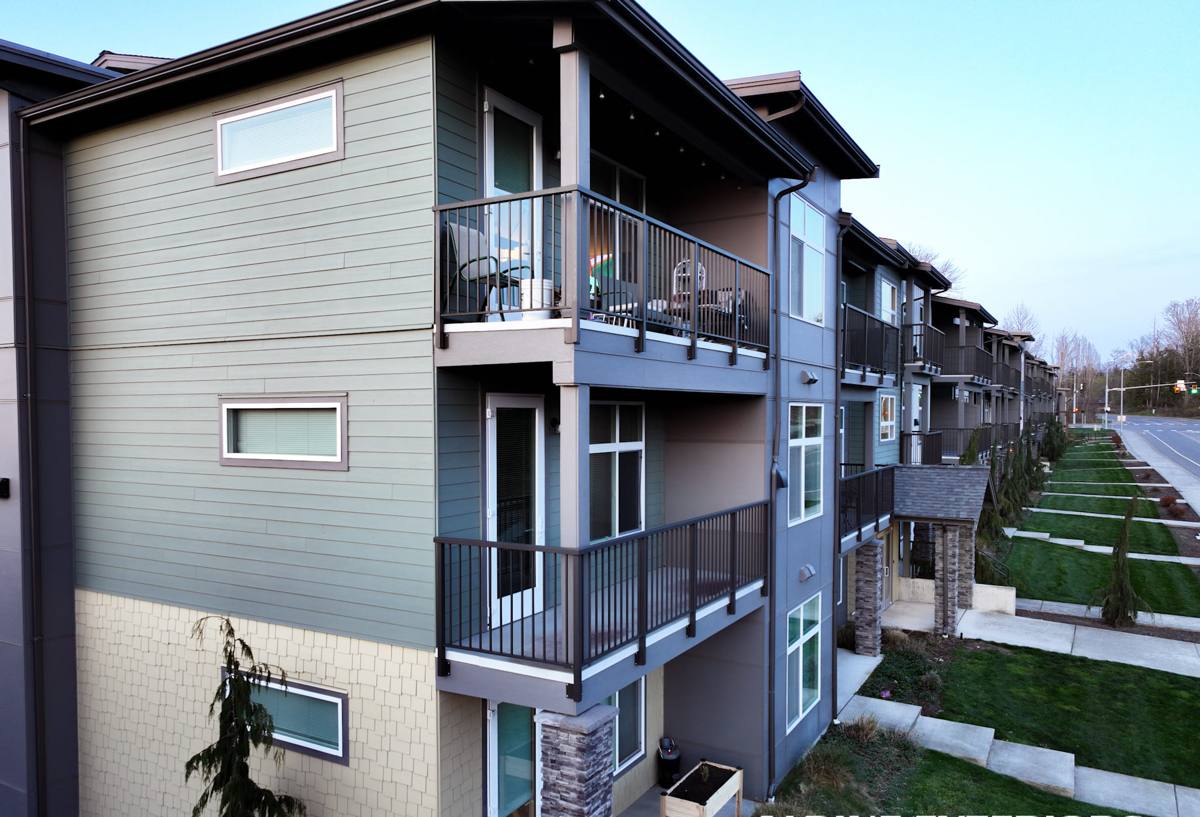
University Park sits among Sarasota's more established, well-landscaped neighborhoods, with mature tree canopy, larger setbacks, and a mix of home styles that have been through more than a few Florida summers and storm seasons. Siding here isn't just cosmetic. It's the layer standing between a home's frame and everything Sarasota County's climate throws at it: hurricane-force wind, wind-driven rain, sun exposure that doesn't really let up, and salt-laden air that reaches well past the coastline on a Gulf breeze. This page covers what that climate actually does to siding, what a correct James Hardie installation involves for a University Park home, and why we've standardized on Hardie as the only siding we install.
How Sarasota's Climate Wears Down Siding
Hurricane Wind and Wind-Driven Rain
Wind isn't an occasional concern here — it's a design condition. Siding on a University Park home has to stay fastened through sustained hurricane-force gusts without lifting, cracking at the corners, or opening seams that let water behind the wall. Wind-driven rain compounds the problem, since it doesn't fall straight down — it gets pushed sideways and upward under laps, around trim, and into any gap that wasn't sealed or flashed correctly. A siding system can look fine in calm weather and still fail the first time a storm actually tests it.
Year-Round UV and Heat
Sarasota gets intense, direct sun essentially every month of the year, not just in summer. That constant UV load fades color, breaks down lower-grade coatings, and causes some siding materials to warp or bow as they heat and cool through daily cycles. A finish that isn't engineered to hold pigment and structural integrity under this kind of sun exposure will show it within a few years — chalking, fading, or an uneven look from one side of the house to the other depending on sun exposure.
Salt Air, Even This Far Inland
University Park isn't beachfront, but Sarasota County's Gulf breezes carry salt further inland than most homeowners assume. Salt-laden moisture settles on exterior surfaces and accelerates corrosion in fasteners and trim hardware, and it can degrade materials that aren't built to resist it. It's a slower process than what a barrier island home deals with, but it's still a real factor in how long siding actually lasts here.
Humidity and Moisture at the Wall
Florida's humidity is close to constant, which means any siding system with weak moisture management is fighting a losing battle year-round, not just during the rainy season. Trapped moisture behind siding leads to sheathing rot, mold, and structural damage long before it's visible from the outside — which is exactly why flashing, water-resistive barriers, and correct installation details matter as much as the siding material itself.
Why We Install Only James Hardie Fiber Cement Siding
We made a deliberate decision to install one siding system rather than offer a menu of options, and it comes down to how each product actually performs in this climate over time, not just at installation. Vinyl siding can warp and fade under sustained Florida heat and UV, and it's a poor match for wind-driven storm conditions since it's engineered to flex rather than hold rigid. Engineered wood and primed wood products are more vulnerable to the kind of moisture exposure Sarasota's humidity creates, and they carry a higher long-term maintenance burden to keep ahead of that risk. James Hardie fiber cement is noncombustible, dimensionally stable across heat and humidity swings, and manufactured in a formulation specifically engineered for hot, humid climates — Hardie's HZ10 product line is built for exactly the conditions Gulf Coast homes deal with, as opposed to a cold-climate formulation adapted for a use it wasn't designed for. It also carries a factory-applied ColorPlus finish and a strong transferable warranty, both of which matter more in a climate this demanding than they would somewhere milder. That's the trade-off we settled on: fewer options, but every job built on a product we trust to actually hold up here.
James Hardie Product Lines That Fit University Park's Homes
University Park's homes cover a range of architectural styles, and Hardie's product lineup is broad enough to match most of them without forcing a look that doesn't fit the house or the neighborhood:
- HardiePlank lap siding — the traditional horizontal lap profile, available in several widths and textures, and the most common choice for full-house siding
- HardiePanel vertical siding — used for board-and-batten style accents or full vertical runs on more contemporary elevations
- HardieShingle siding — staggered or straight-edge shingle profiles for gable accents or full shingle-style sections
- HardieTrim boards — matching trim for corners, window and door surrounds, and fascia, so the whole exterior reads as one finished system
Hardie's ColorPlus finish comes in a range of factory-baked colors, which gives homeowners in established communities with architectural expectations — common throughout Sarasota's planned neighborhoods — a wide palette to work within while keeping a consistent, uniform finish across every board.
What a Correct Hardie Installation Involves
Flashing and Moisture Management
Fiber cement siding is only as good as the moisture barrier and flashing behind it. Every penetration — windows, doors, hose bibs, light fixtures — needs correctly lapped flashing and a continuous water-resistive barrier underneath the siding itself. Skipping or rushing this step is the single most common cause of hidden moisture damage behind siding that otherwise looks fine.
Fastening for Wind Uplift
Hardie specifies fastener type, spacing, and embedment depth for a reason, and those specs get stricter in higher wind zones like ours. Under-fastened or incorrectly placed nails are a common cause of boards that rattle, lift, or crack at the fastener point during a windstorm — a problem that usually doesn't show up until the first serious blow.
Factory Finish vs. Field-Applied Paint
ColorPlus is baked on at the factory under controlled conditions, which gives it more consistent adhesion and UV resistance than paint applied on-site after installation. Field-painted fiber cement can still perform well, but it depends heavily on surface prep and paint quality — ColorPlus removes that variable entirely, which matters in a climate where UV exposure is this constant.
Joints, Gaps, and Caulking
Hardie siding needs specific gaps at butt joints and trim to allow for expansion and to keep water from wicking into the seams, sealed with a high-quality, paintable sealant rated for exterior use. Tight-fit joints without the right gap or sealant are a slow-developing failure point — fine at first, then a moisture entry point a few years later.
- Site walkthrough to assess existing siding, moisture barrier condition, and any substrate repair needed
- Removal of old siding and inspection of sheathing for hidden damage before anything new goes up
- Installation of a continuous water-resistive barrier and correct flashing at every penetration
- Hardie board installation to manufacturer fastening specs, matched to the home's wind exposure
- Trim, caulking, and final detailing, followed by a walkthrough with the homeowner
Comparing Siding Options for a Sarasota Climate
| Factor | James Hardie Fiber Cement | Vinyl | Engineered/Primed Wood |
|---|---|---|---|
| Wind and impact resistance | Rigid, holds shape and fasteners under storm-force wind | Flexes and can crack or blow off in high wind | Rigid but more prone to impact damage |
| Heat and UV stability | Dimensionally stable; ColorPlus resists fading | Can warp, sag, or fade under sustained heat and sun | Finish can chalk or fade faster without upkeep |
| Moisture and humidity performance | Non-combustible, engineered for hot/humid climates (HZ10) | Handles moisture reasonably but traps heat behind it | Vulnerable to swelling, rot without diligent maintenance |
| Maintenance | Occasional washing; repaint only if ever needed | Low, but limited repair options if damaged | Regular inspection and refinishing required |
| Warranty | Strong, transferable manufacturer warranty | Varies widely by product grade | Typically shorter, finish-dependent coverage |
Our Process for a University Park Siding Project
We start with an on-site inspection to look at the current siding, the condition of the sheathing underneath where it's accessible, and any problem areas around windows, corners, or roof lines. From there we walk through product lines, colors, and a written estimate, so there's a clear picture of scope and cost before anything is scheduled. Once a project is approved, we handle the Sarasota County permitting that applies to siding replacement, schedule the work around weather where a storm system is tracking through, and keep the homeowner informed at each stage — removal, barrier and flashing work, installation, and final trim and cleanup. We finish with a walkthrough so any questions get answered on-site, not after the fact.
Keeping Your Hardie Siding Performing After Installation
Hardie siding is low-maintenance, not maintenance-free. A few simple habits go a long way toward getting its full lifespan out of a University Park home:
- Rinse the exterior periodically to clear pollen, dust, and salt residue before it builds up on the finish
- Keep irrigation heads and sprinklers pointed away from the siding to avoid constant direct wetting in one spot
- Inspect caulking at joints and trim every year or two, and have any cracked or missing sealant redone promptly
- Trim back shrubs and landscaping so airflow isn't blocked against the siding, which helps it dry out fully after rain
- Have any impact damage — from storm debris or otherwise — repaired soon rather than leaving an opening for moisture
Why Hiring a Crew That Already Works in University Park Matters
A siding crew that mostly works other parts of the state can still install Hardie board competently, but a University Park project has details that come up less often elsewhere — architectural guidelines common to established, well-maintained communities, mature landscaping that has to be worked around carefully, and homes where matching an existing trim profile or color scheme actually matters to the homeowner and the neighborhood. Working in this area regularly means we're not learning those details on your project. We know how to plan around a wind season that's part of doing business on Florida's Gulf Coast, and we're upfront about what a job actually needs versus what's just an add-on.
If you're weighing a siding replacement or repair for a University Park home, we're glad to walk the property with you, answer questions honestly, and lay out a written estimate with no pressure to move forward until you're ready. Reach out below for a free estimate.