 Sarasota Siding
 Board & Batten Siding Built for Venice's Coastal Climate
Board and batten is one of the most requested siding styles we install in Venice, and for good reason. The vertical lines read as clean and classic on coastal cottages, Mediterranean-influenced homes, and newer construction alike, and it holds up visually in a way that flat lap siding sometimes doesn't on taller wall sections or gable accents. But the look is only half the story. In Sarasota County, siding doesn't just have to look good — it has to survive hurricane-force wind loads, near-constant UV exposure, wind-driven rain that gets pushed sideways into wall assemblies, and salt air drifting in off the Gulf. Board and batten has more seams, more fastener points, and more places for water to find a way in than a standard lap profile, which means the material and the installation both matter more here than they would somewhere with a milder climate.
This page walks through what board and batten actually is, what Venice's climate demands from it, what a correct installation looks like, and why the material we install — James Hardie fiber cement — is the only option we put on a home when board and batten is the style a homeowner wants.
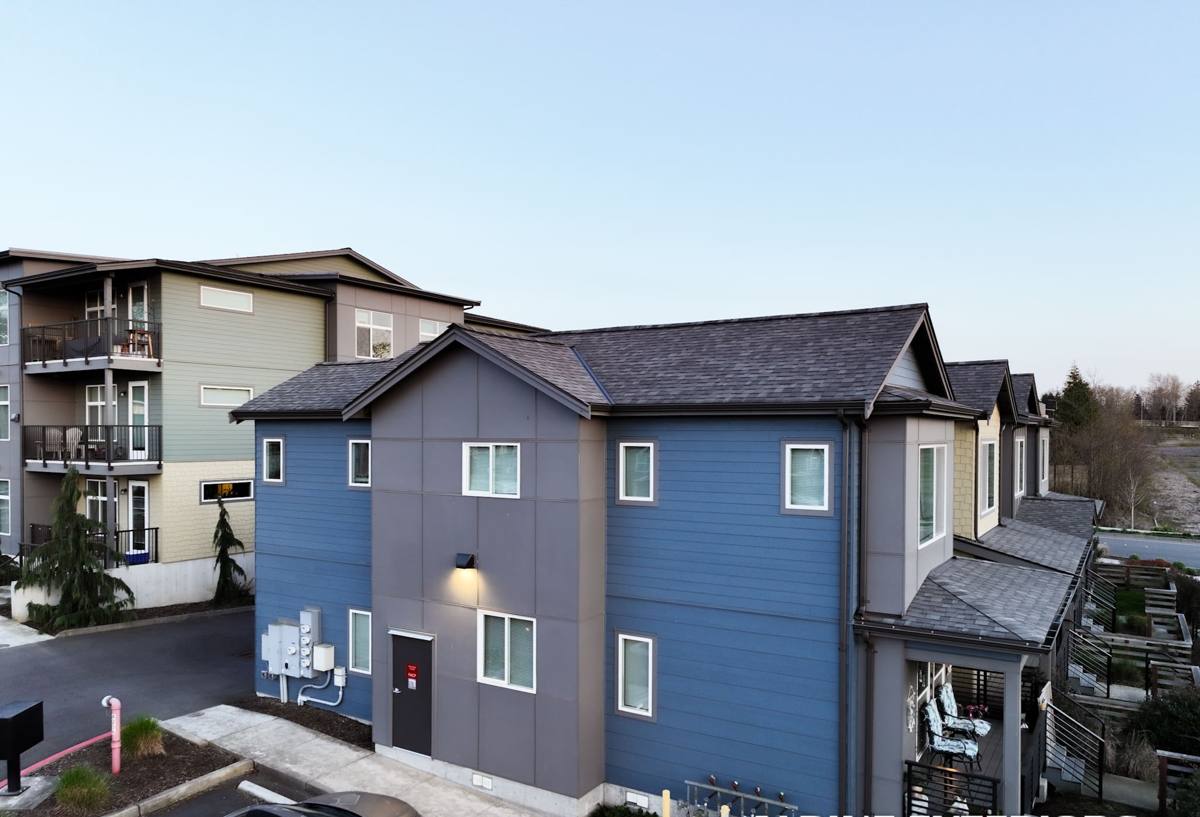
What Board & Batten Siding Is
Board and batten is a two-layer siding pattern: wide vertical panels or boards installed first, then narrower strips (the "battens") fastened over the seams between them. The result is a rhythm of wide-narrow-wide-narrow vertical lines instead of the horizontal shadow lines you get from lap siding. It can be run as the primary siding across an entire home, or used selectively as an accent on gables, dormers, or a front-facing section to break up a large expanse of lap siding.
Why Homeowners in Venice Choose It
Board and batten tends to get chosen for one of two reasons: either the homeowner wants a specific architectural look — often something with a coastal cottage, farmhouse, or craftsman feel — or they're using it as an accent to add texture and dimension to an otherwise flat facade. Both are legitimate reasons, and both come with the same underlying requirement: the assembly behind those vertical seams has to be built correctly, because there are simply more joints in a board and batten wall than in a standard horizontal lap wall of the same size.
What Venice's Climate Demands From Any Siding System
Venice sits close to the Gulf, which means the same air that makes the outdoors pleasant most of the year is also loaded with salt that accelerates corrosion on fasteners and trim. Add in the realities of a Sarasota County exterior and you get four stressors that any siding system here has to be engineered to handle:
- Hurricane-force wind: Wind doesn't just push on a wall, it creates uplift and pressure differentials at edges, corners, and seams — exactly where board and batten has the most joints.
- Intense, year-round UV: Florida sun degrades paint film and lesser materials' surface coatings faster than in northern climates, leading to fading, chalking, and premature repainting cycles.
- Wind-driven rain: Storms here don't just drop rain, they drive it horizontally into wall assemblies, which means water management behind the siding matters as much as the siding itself.
- Salt air: Airborne salt corrodes exposed metal fasteners and trim over time and can accelerate wear on materials not rated for coastal exposure.
None of these are unique to board and batten, but board and batten amplifies the consequences of getting them wrong, because more seams mean more opportunities for wind-driven rain to intrude if flashing and fastening aren't handled to spec.
What a Correct Board & Batten Installation Involves
A board and batten wall that holds up in this climate isn't just about nailing boards to studs. There's a sequence, and skipping steps is exactly how homeowners end up with moisture problems behind siding that looks fine from the curb.
Substrate and Moisture Management
Before any siding goes up, the wall needs a continuous, correctly lapped water-resistive barrier, with all penetrations — windows, doors, hose bibs, electrical — properly flashed and sealed. This is the layer that actually keeps wind-driven rain out of the wall cavity if any moisture gets past the siding itself, and it's invisible once the job is done, which is exactly why it's the step most often shortcut by crews trying to move fast.
Fastening and Batten Spacing
Fastener type, length, and spacing all have to account for local wind load requirements, not generic manufacturer minimums. Battens need consistent spacing and correct engagement into the boards beneath them, not just enough to hold them up for the first year. Under-fastened board and batten is one of the more common failure points we see in wind events, because the vertical boards present more surface area to wind pressure than a horizontal lap course of the same width.
Sealing and Flashing Details
Every seam, corner, and transition — where board and batten meets a window trim, a roofline, or a different siding profile — needs correct flashing and sealant detailing. Caulk is not a substitute for flashing; it's a secondary line of defense, and treating it as the primary defense is how homes end up with water intrusion that doesn't show up until it's already caused damage behind the wall.
Material Choices for Board & Batten: A Comparison
Board and batten can be built from several materials, and the material choice matters more here than in a milder climate because of the combination of UV, humidity, and salt exposure. Here's how the common options compare for a Gulf Coast application:
| Material | UV / Fade Resistance | Moisture Behavior | Wind Performance | Long-Term Upkeep |
|---|---|---|---|---|
| James Hardie fiber cement | Factory ColorPlus finish engineered to resist fading | Non-combustible, dimensionally stable, engineered for humid climates | Rated system, installed to manufacturer and local wind-load specs | Low — no re-painting cycle with ColorPlus finish, periodic inspection only |
| Primed wood (spruce/pine) | Paint film degrades faster under intense UV | Absorbs moisture, prone to swelling, rot, and insect issues near the coast | Performance depends heavily on fastening and board quality | High — regular repainting and moisture monitoring required |
| Cedar | Natural weathering changes appearance over time without finish maintenance | Better rot resistance than spruce but still moisture-sensitive at seams | Adequate when installed correctly, but seams are a vulnerability | Moderate to high — finish maintenance to preserve appearance and protection |
| Vinyl-style battens | Can fade and become brittle under sustained intense sun | Doesn't absorb water, but seams can allow wind-driven rain behind panels | Can loosen, crack, or blow off in high wind if not rated for the exposure | Low material upkeep, but limited repair options if damaged |
We install James Hardie fiber cement exclusively. It's not because the alternatives are without merit — cedar has real aesthetic appeal and vinyl has a lower up-front cost — but because we've made a professional decision to standardize on the product that gives Venice homeowners the best combination of climate performance, finish durability, and a warranty backed by a manufacturer built around exactly this kind of exposure.
Our Process From Estimate to Finished Wall
Every board and batten project we take on in Venice follows the same sequence, because consistency is what prevents the shortcuts that cause problems down the road.
- On-site assessment: We look at the existing wall assembly, current siding condition, and any moisture or trim issues before quoting anything.
- Design and spacing plan: We work out board width, batten spacing, and reveal to match the look the homeowner wants while keeping fastening within spec.
- Substrate prep: Removal of failing existing material, repair of any damaged sheathing, and installation of a continuous water-resistive barrier.
- Flashing and penetrations: Every window, door, and wall penetration gets flashed before a single board goes up.
- Installation: Boards and battens installed per Hardie's fastening schedule and local wind-load requirements, not a generic minimum.
- Final detailing: Caulking, trim, and touch-up work at seams and transitions.
- Walkthrough: We go over the finished job with the homeowner before we consider it complete.
Why Hiring a Crew That Already Works in Venice Matters
Board and batten installation isn't complicated in theory, but the details that matter — correct fastening for coastal wind exposure, flashing sequences that account for wind-driven rain, and material choices that hold up to salt air and UV — are exactly the details a crew learns by working this specific area repeatedly, not by reading a manufacturer spec sheet once. A crew that already works in Venice has already worked through the practical realities of building here: what wall assemblies typically look like on homes in this part of Sarasota County, how the coastal exposure affects material choices, and what it takes to pass inspection here. That's not something you can shortcut with a crew that primarily works inland.
Maintenance and What to Expect Long-Term
Once a board and batten wall is installed correctly with James Hardie fiber cement, ongoing maintenance is straightforward: periodic rinsing to keep salt residue from building up, an annual visual check of caulking and trim seams, and prompt attention if a seam ever looks compromised after a major storm. Because the ColorPlus finish is factory-applied and engineered to resist fading, homeowners aren't on a repainting cycle the way they would be with primed wood. That's a meaningful difference over a 10 or 20 year span, both in cost and in the amount of attention the exterior needs.
Questions to Ask Before You Hire
Whether you hire us or someone else, these are the questions that separate a contractor who understands board and batten in this climate from one who's just installing a look:
- What water-resistive barrier and flashing sequence will be used behind the siding?
- What fastening schedule is being used, and is it matched to local wind-load requirements or just a generic minimum?
- What material is the board and batten made from, and how does it hold up to salt air and sustained UV?
- What does the manufacturer's warranty actually cover, and is it transferable if you sell the home?
- Has this crew installed board and batten specifically, not just standard lap siding, in this area before?
If you're weighing board and batten for a Venice home and want a straight answer on what it would take to do it right, we're glad to walk the property with you and put together a free, no-pressure estimate — just fill out the form below.